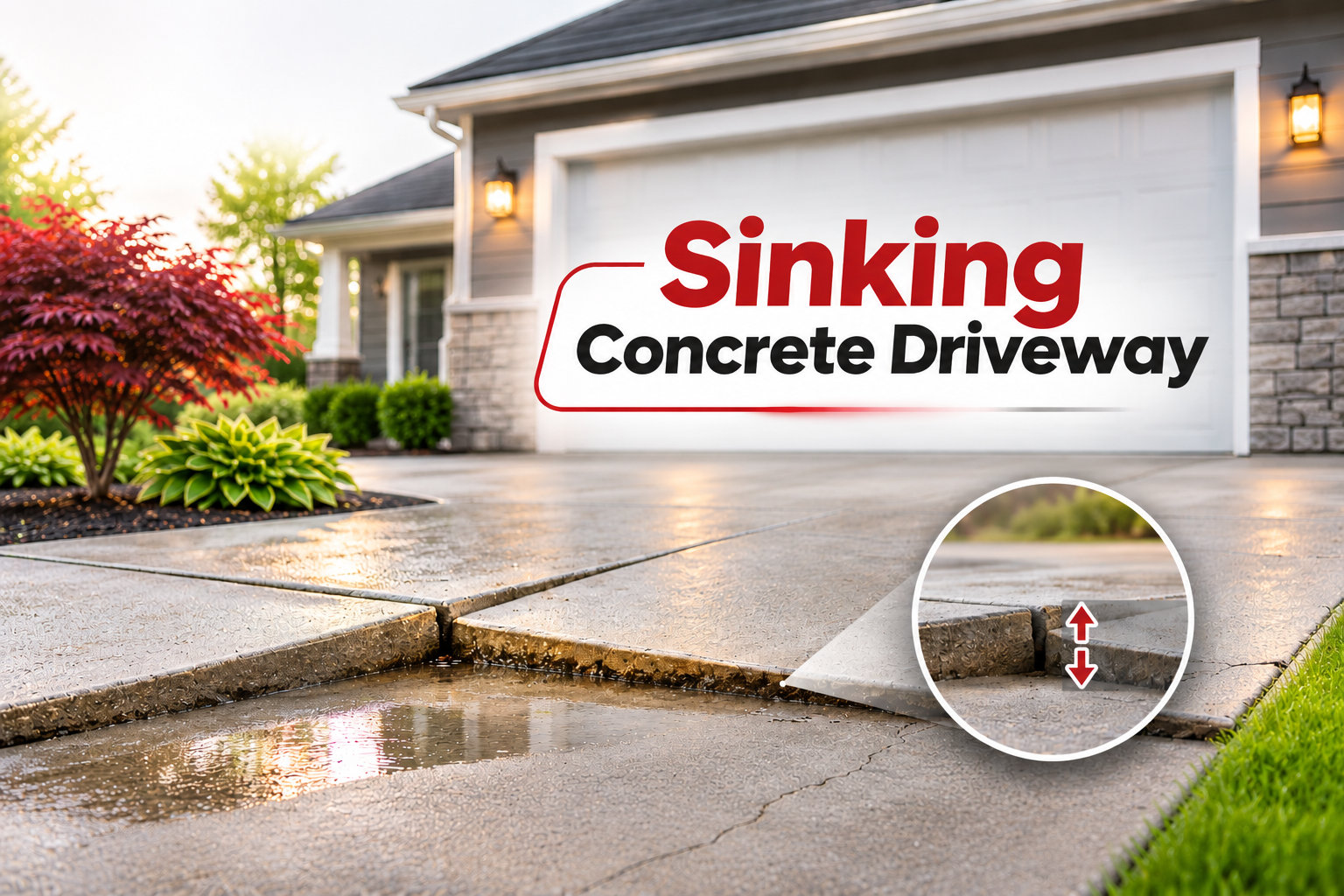
Uneven concrete is more than an eyesore. A sunken driveway can collect rainwater, while a raised sidewalk edge can become a tripping hazard. Concrete lifting offers a way to correct many settled slabs without tearing them out. Before repairs, understand why surfaces sink and who should handle the job.
What Is Concrete?
Concrete is a construction material made from cement, water, sand, and gravel or crushed stone. Cement reacts with water and binds the aggregates together as the mixture hardens. Unlike cement, which is just one ingredient, concrete becomes the finished building material.
Its main ingredients perform different jobs:
- Cement: Binds the mixture through hydration.
- Water: Starts hydration and helps with mixing and placement.
- Fine aggregates: Fill gaps and improve consistency.
- Coarse aggregates: Provide bulk and structural stability.
- Admixtures: Adjust setting time, workability, or durability when needed.
Proper placement and curing affect performance. Adding excess water may simplify pouring, but it can reduce the finished material’s strength.
Common Types and Uses of Concrete in Construction
Different projects need different mixtures and construction methods:
- Plain concrete: Suitable for basic pavements and nonstructural applications.
- Reinforced concrete: Contains steel reinforcement for beams, columns, and other load bearing elements.
- Precast concrete: Manufactured in controlled conditions before installation.
- Lightweight concrete: Reduces weight where appropriate for the design.
- High performance concrete: Engineered for demanding strength or durability requirements.
Concrete is used in foundations, driveways, patios, sidewalks, retaining walls, floors, and bridges. Its compressive strength and versatility make it useful, but the soil underneath must also provide support.
What Is Concrete Lifting?
Concrete lifting is a repair method that raises a settled slab by placing material underneath it. Also called concrete raising or slabjacking, it addresses uneven surfaces caused by lost ground support. Instead of demolishing an otherwise sound slab, technicians fill underground voids and lift the existing concrete toward its intended level.
Typical warning signs include:
- A driveway section lower than the adjoining pavement.
- Water pooling near a patio or garage.
- Uneven walkway joints creating trip hazards.
- Gaps beneath steps or along slab edges.
- Sloping concrete directing water toward a building.
These symptoms deserve an inspection because movement can continue if drainage problems or unstable soil remain untreated.
How Does Concrete Lifting Work?
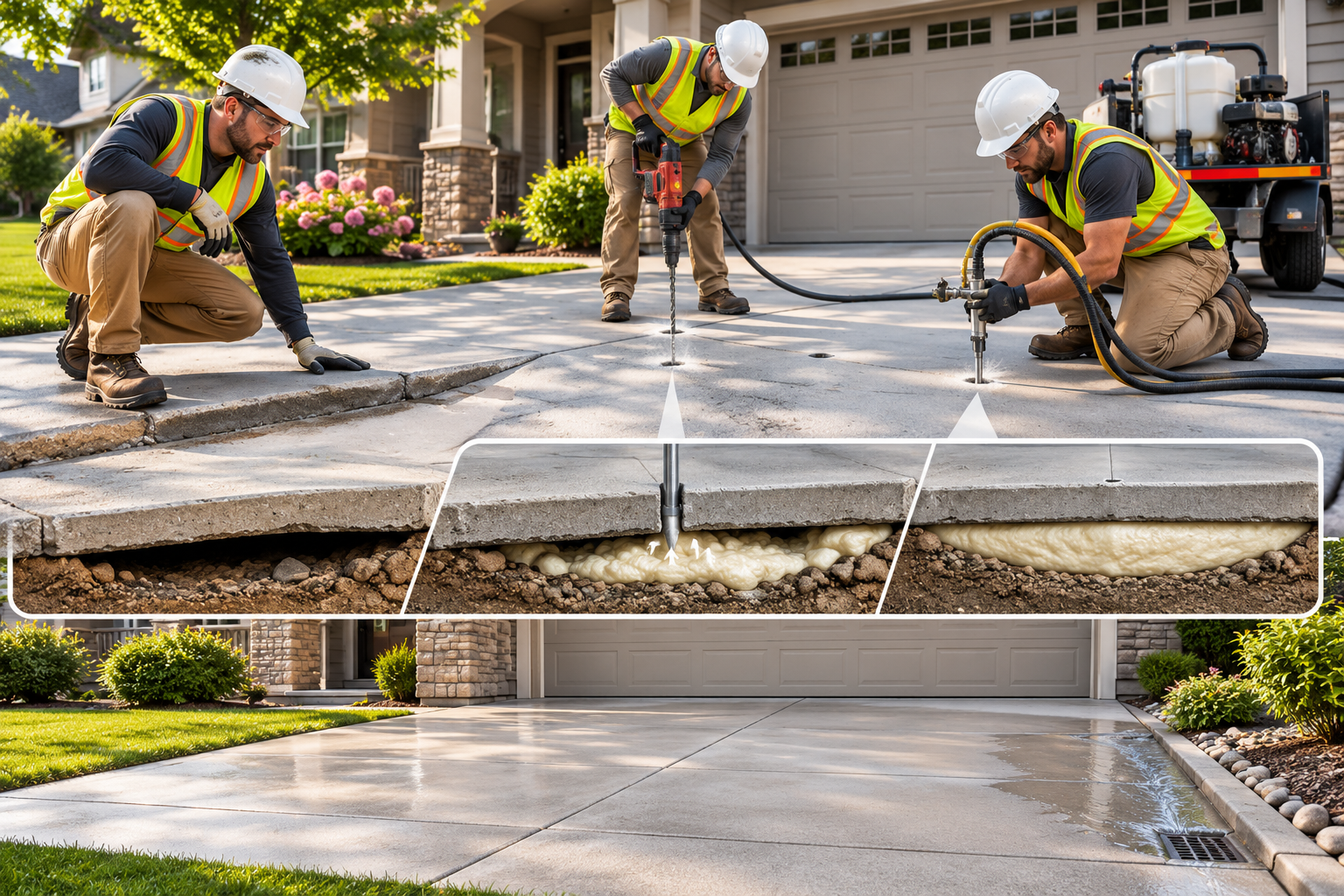
The concrete lifting process generally follows five practical steps:
- Inspection: The technician checks settlement, cracks, drainage, surrounding structures, and slab condition.
- Planning: Injection locations and the target elevation are identified.
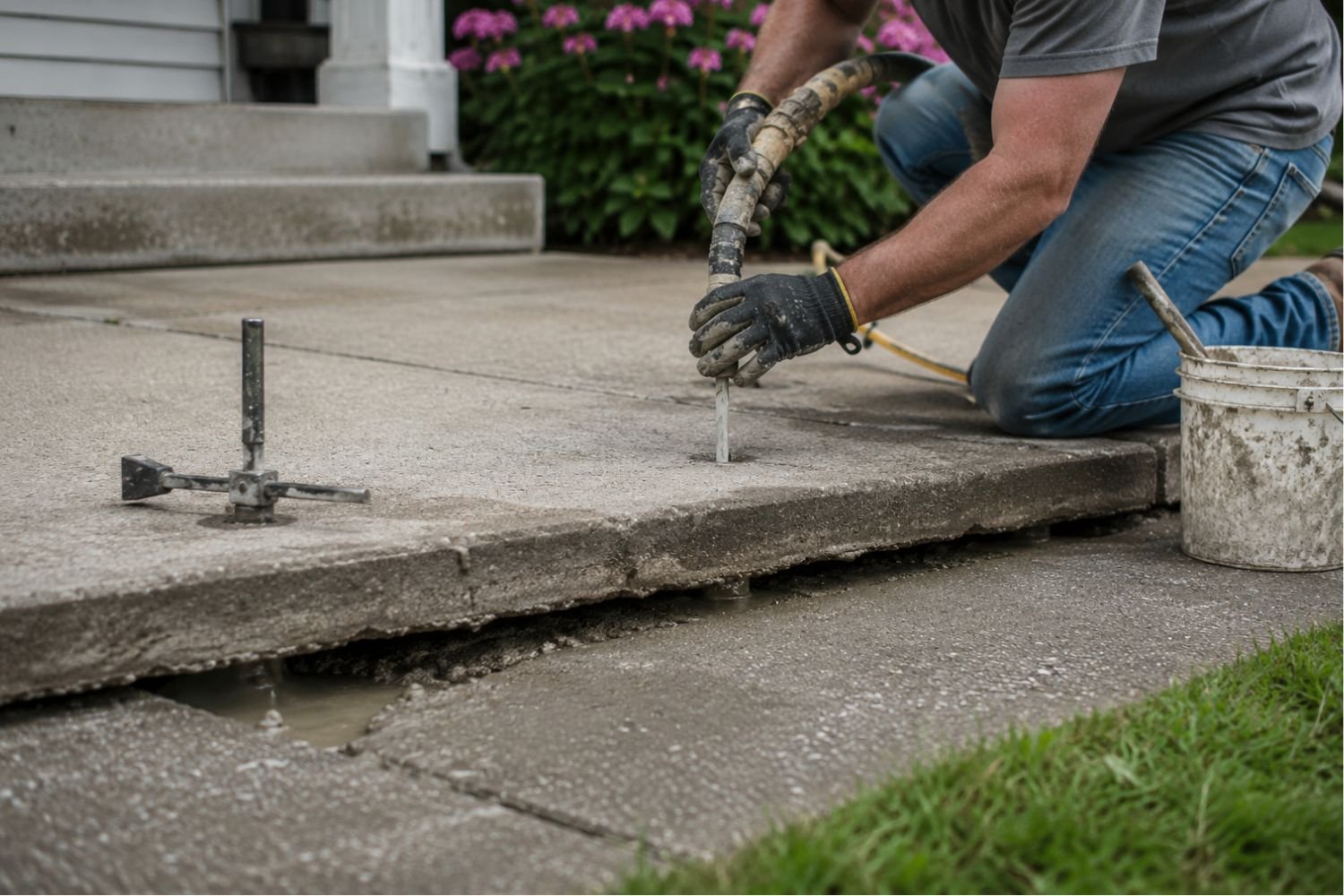
- Drilling: Small access holes are made through the slab.
- Injection: Grout or expanding polyurethane foam fills voids and raises the surface.
- Finishing: The technician confirms alignment, patches holes, and cleans the work area.
Two common methods are mudjacking and polyurethane foam injection. Mudjacking pumps a cement based slurry underneath the slab. Foam injection uses lightweight expanding material and typically requires smaller access holes. Neither method solves every problem, and return to service times depend on the selected material and site conditions.
Concrete Lifting vs. Concrete Contractors
| Factor | Concrete Lifting Specialists | General Concrete Contractors |
|---|---|---|
| Main service | Raise and stabilize settled slabs | Install, finish, repair, or replace concrete |
| Typical work | Driveways, sidewalks, patios | Foundations, slabs, walls, driveways |
| Approach | Inject material beneath existing concrete | Pour, form, reinforce, resurface, or remove concrete |
| Best fit | Sound slab with settlement | New work or extensively damaged concrete |
| Site disruption | Usually limited drilling | May involve excavation and demolition |
| Key question | Can the slab be lifted safely? | Does the slab need rebuilding? |
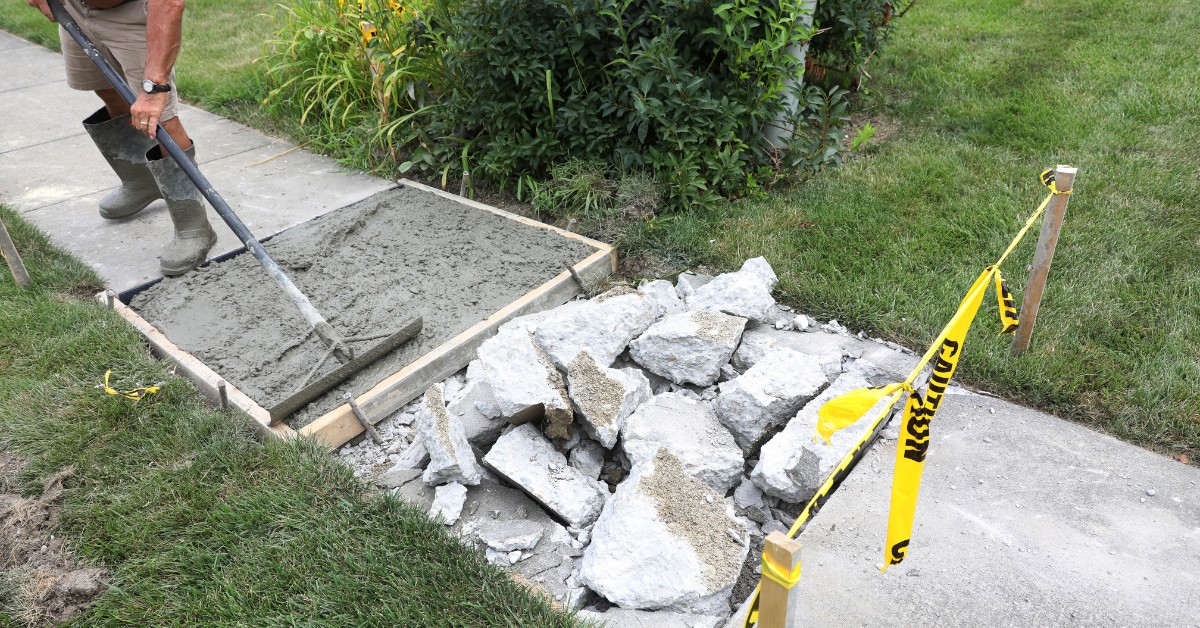
Some concrete contractors also offer lifting services. The repair method matters more than the business label. Ask what the inspection found and why the proposed solution matches the slab’s condition.
When Is Concrete Lifting Worth Considering?
Concrete lifting may be appropriate when a slab is mostly intact but has dropped because of soil settlement, erosion, or voids. It can preserve existing pavement, reduce demolition waste, and limit disturbance around landscaping.
However, lifting is not automatically the right answer. Severely fragmented concrete, major structural movement, or badly deteriorated reinforcement may require replacement or engineering assessment. Fixing downspout discharge, leaks, and grading issues is equally important to prevent renewed settlement.
Before hiring, ask contractors to explain their material choice, patching method, warranty terms, and expected downtime. Request an itemized quotation and confirm whether drainage repairs are included. An estimate should explain the cause, not just promise a level surface.
Frequently Asked Questions
1. What is concrete made of?
Concrete is made from cement, water, sand, and gravel or crushed stone. Cement reacts with water to bind the aggregates together, creating a strong, durable construction material.
2. How does concrete lifting work for a driveway?
Concrete lifting works by drilling small holes into the settled driveway and injecting polyurethane foam or cement based slurry underneath. The material fills empty spaces and gradually raises the slab to the required level.
3. Is concrete lifting cheaper than replacement?
Usually, yes. Lifting avoids removing and rebuilding the entire slab, reducing labor, material costs, and disruption. However, prices depend on the driveway’s condition and repair requirements.
4. What is the 4 2 1 rule for concrete?
The 4 2 1 rule is a simple concrete mixing ratio consisting of 4 parts gravel, 2 parts sand, and 1 part cement. Water is added gradually to achieve the required consistency. This mixture is commonly used for small, nonstructural concrete projects such as pathways and garden slabs. Structural construction requires a properly specified concrete mix.
5. How soon can the surface be used?
Some polyurethane foam systems allow driveway use relatively quickly. Cement based lifting methods may require additional curing time. Always follow the contractor’s instructions before parking vehicles on the repaired surface.
6. What is a concrete contractor in construction?
A concrete contractor is a construction professional who specializes in installing, repairing, and maintaining concrete structures. Their work includes foundations, driveways, sidewalks, patios, and floors. They handle concrete mixing, pouring, leveling, finishing, and curing to ensure strong, durable surfaces.
Conclusion
This approach can restore safer, more usable surfaces when the slab remains structurally sound. The best result comes from identifying settlement causes, choosing an appropriate technique, and selecting professionals who explain their recommendations clearly. Repair the underlying support, not just the visible slope.