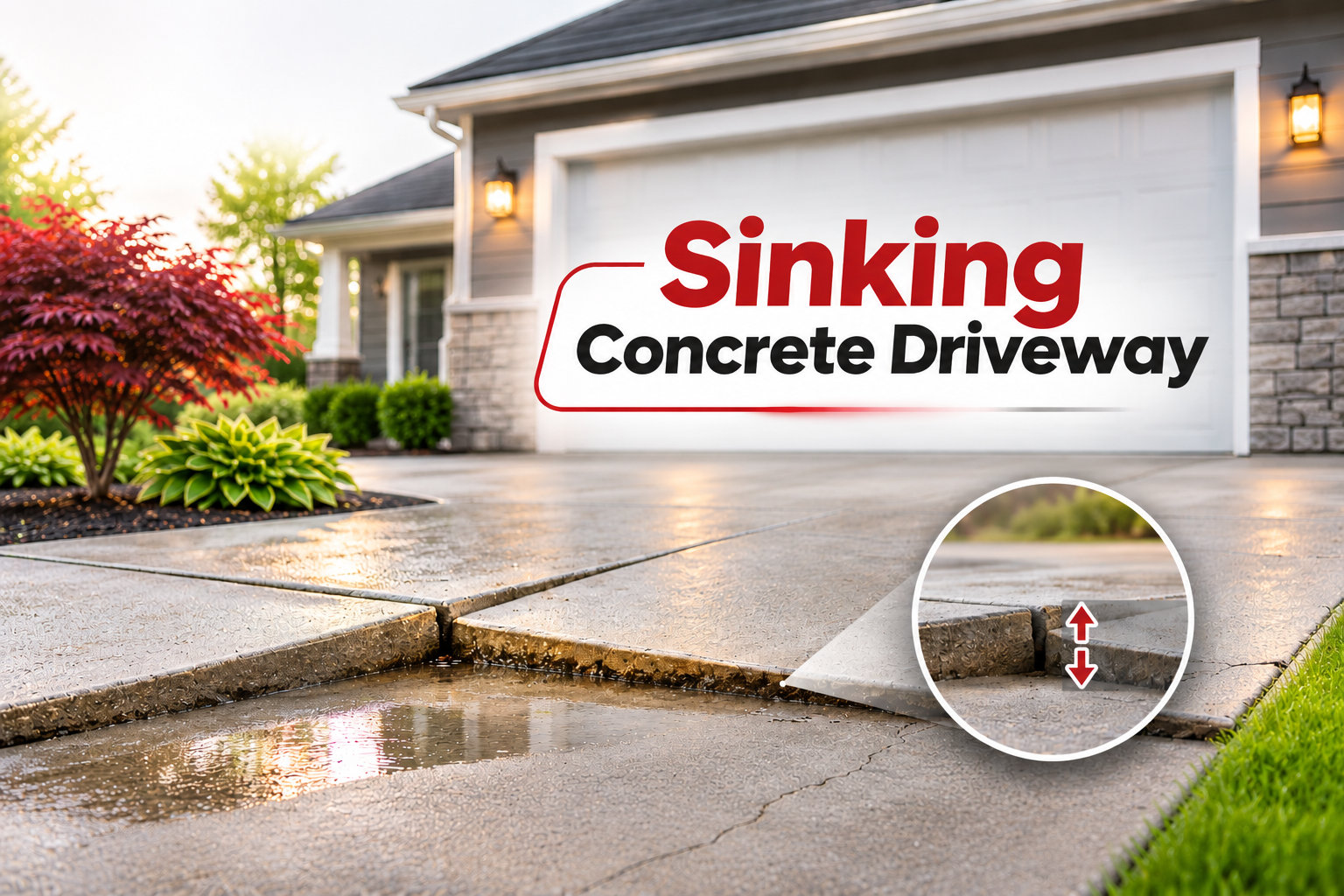
A sinking concrete driveway doesn’t always mean you need to tear everything out and start again. In many Red Deer properties, the concrete itself remains strong while the soil underneath has shifted, settled or washed away.
Concrete lifting can often restore the surface without the expense and disruption of complete replacement. However, the right solution depends on the condition of the slab, the underlying ground and the extent of the damage.
Here’s what you should know before deciding:
- Concrete lifting: Suitable for structurally sound slabs that have settled.
- Crack repair: Helps address minor surface damage but cannot correct significant settlement.
- Full replacement: Usually necessary when concrete is severely broken or deteriorated.
- Typical costs: Lifting a driveway section may cost approximately $800–$2,400 using foam injection, while complete replacement can cost substantially more.
- Local conditions: Freeze-thaw cycles, poor drainage and unstable soil contribute to concrete movement throughout Central Alberta.
An on-site inspection can determine whether your driveway can be restored or requires a more extensive repair.
Signs Your Driveway Has Sunk or Become Uneven
Driveway settlement often develops gradually. What begins as a slight difference between two slabs can eventually affect drainage, accessibility and vehicle movement.
Recognizing these changes early may prevent additional damage.
Trip Hazards, Cracks, Water Pooling
Common warning signs include:
- Raised edges: Adjacent concrete sections no longer sit at the same height.
- Standing water: Rainwater or melting snow collects in depressions.
- Visible gaps: Spaces appear between the driveway, garage floor or adjoining walkway.
- Developing cracks: Sections begin separating as the ground loses support.
- Vehicle clearance issues: A noticeable dip causes vehicles to scrape when entering the garage.
Pay particular attention to water collecting near your garage or foundation. Poor surface drainage can allow moisture to reach areas where it may contribute to further settlement.
A simple way to monitor movement is to photograph affected joints and measure noticeable height differences over several months. These observations can help a contractor evaluate whether the problem is progressing.
Why Concrete Driveways Sink (Soil, Water, Voids)
Concrete slabs depend on consistent support from the material beneath them. When that support changes, parts of the driveway can settle independently.
Soil Erosion, Poor Compaction, Drainage
Three common causes deserve attention.
1. Soil erosion
Rainwater and spring snowmelt can carry fine soil particles away from beneath concrete. Over time, unsupported spaces develop.
2. Inadequate ground compaction
Fill material that was not sufficiently compacted during construction may gradually compress under repeated vehicle loads.
3. Drainage problems
Downspouts discharging near driveway edges, incorrect grading and persistent moisture can weaken underlying support.
Red Deer’s cold winters add another complication. Water in the ground can freeze, contributing to upward movement, while thawing and changes in soil moisture may lead to settlement.
How Voids Develop Beneath Concrete
The progression often follows this pattern:
Water enters joints → Supporting soil moves or compresses → Voids develop → Slab loses support → Concrete settles or cracks
This distinction matters because surface crack filling alone won’t restore missing support beneath a driveway.
Correcting the drainage issue alongside the concrete repair helps reduce the risk of the problem returning.
Concrete Lifting vs Replacement: Side-by-Side
For many properties, the decision comes down to the condition of the existing concrete rather than its age alone.
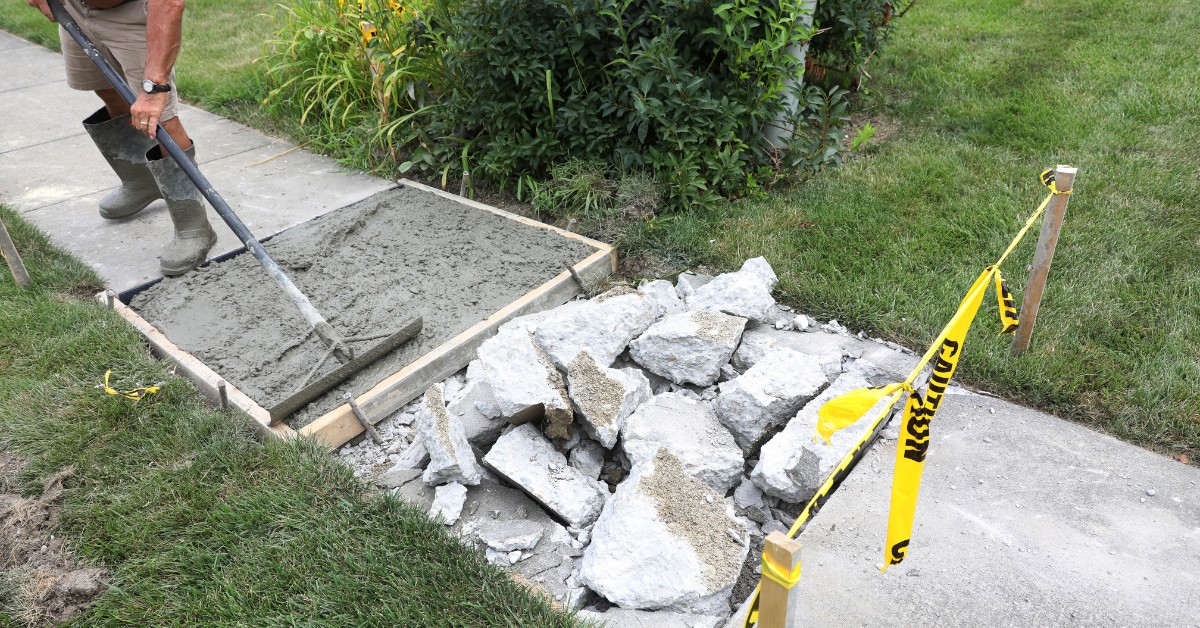
Concrete lifting raises sections using injected material beneath the slab. Replacement involves removing the damaged concrete, preparing the base and pouring a new surface.
Cost, Time, Mess, Curing
| Factor | Concrete Lifting | Full Replacement |
|---|---|---|
| Best suited for | Intact, settled slabs | Severely damaged concrete |
| Existing concrete | Preserved | Removed |
| Excavation | Usually minimal | Required |
| Disruption | Relatively low | More extensive |
| Project duration | Often completed in hours | Usually several working days |
| Vehicle access | Often same day with foam | Requires curing time |
| Appearance | Existing finish remains | Entirely new surface |
| Main limitation | Cannot repair structural slab failure | Higher cost and greater disruption |
Lifting is often attractive because it preserves the existing driveway while addressing the loss of support.
Replacement provides a new surface and an opportunity to rebuild the base. However, the preparation must be done correctly, or the new concrete may experience similar problems.
Practical example:
Imagine a two-car driveway where one section has dropped near the garage entrance, but the concrete remains largely intact.
Lifting that section could restore the transition without disturbing the rest of the driveway.
If several panels are broken into loose pieces, replacement may provide a more dependable result.
When Lifting Is NOT the Right Choice
Although modern lifting techniques can correct many settlement problems, they are not suitable for every driveway.
Severe Cracking / Structural Failure
Replacement may be more appropriate when:
- Concrete has extensive interconnected cracks.
- Sections have broken into multiple unstable pieces.
- The slab shows severe surface deterioration.
- Reinforcement is exposed or badly corroded.
- The underlying ground continues to move significantly.
- The driveway’s original construction is inadequate.
Lifting changes the elevation and restores support; it does not rebuild damaged concrete.
Similarly, when settlement appears connected to foundation movement, homeowners should seek an assessment from a qualified foundation repair specialist.
A foundation contractor may need to investigate soil movement, drainage or structural conditions before driveway work begins.
Choosing the correct specialist prevents a cosmetic repair from concealing a more serious underlying issue.
How the Lifting Process Works
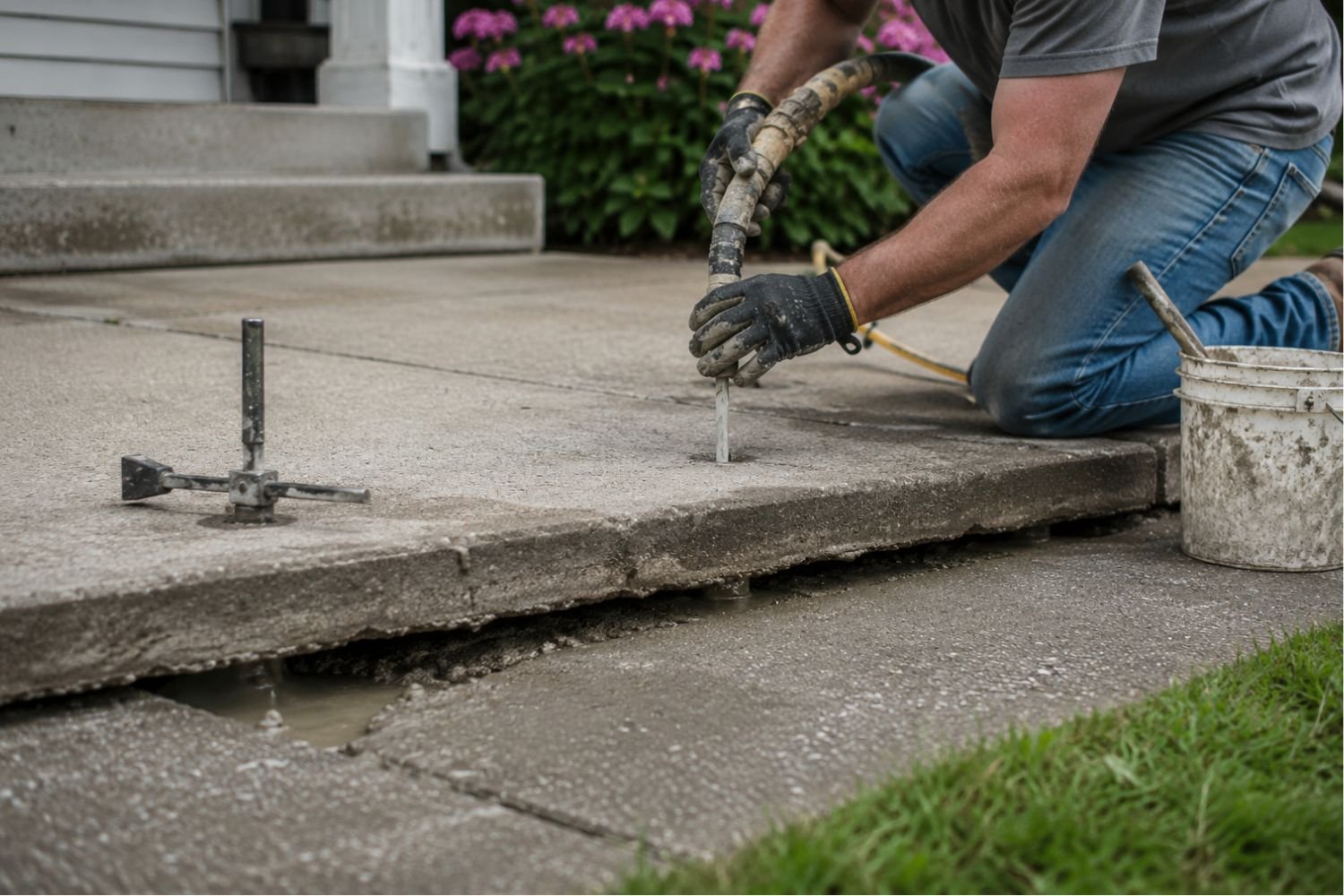
Modern concrete driveway repairs frequently use polyurethane foam injection to raise settled slabs with limited surface disturbance.
Foam Injection Steps
Step 1: Driveway inspection
A technician evaluates settlement, visible cracks, slab condition and surrounding drainage.
Step 2: Access holes
Small holes are drilled at selected points to reach beneath the concrete.
Step 3: Foam injection
Specialized polyurethane material is injected beneath the slab. As it expands, it fills accessible voids and creates lifting pressure.
Step 4: Controlled leveling
The technician carefully monitors the concrete’s movement to achieve the required elevation without placing excessive stress on the slab.
Step 5: Finishing and inspection
Injection holes are patched, transitions are checked and the surface is assessed for drainage.
For suitable projects, the repair can often be completed within several hours. Vehicle access may be restored shortly afterward, depending on the materials and site conditions.
Importantly, foam injection doesn’t automatically resolve ongoing erosion or drainage problems. Those issues should also be addressed.
Cost and Time Comparison
Pricing varies considerably because two driveways with similar visible settlement may have very different conditions beneath the surface.
Typical Price Range in Red Deer
The following figures are indicative local-market planning ranges in Canadian dollars, not guaranteed quotations.
| Service | Approximate Cost (CAD) |
|---|---|
| Mudjacking a driveway section | $600–$1,800 |
| Polyurethane foam lifting, approximately 200 sq. ft. | $800–$2,400 |
| Minor to moderate concrete repairs | $500–$3,000 |
| New standard concrete driveway | $14–$20 per sq. ft. |
| Full driveway replacement | $16–$24 per sq. ft. |
Actual costs depend on the repair area, amount of material required, access, site preparation and disposal requirements.
Example: A 600-square-foot driveway
At an estimated replacement rate of $16–$24 per square foot, a complete replacement could cost approximately $9,600–$14,400.
If only one section needs lifting, the repair quotation could be substantially lower.
This comparison illustrates why a full driveway replacement shouldn’t be the automatic response to localized settlement.
Warranty, Lifespan
A professionally completed lift can deliver long-lasting results, but its performance depends on the condition of the supporting soil and the elimination of ongoing moisture problems.
Ask contractors these questions before accepting a quotation:
- What exactly does the warranty cover?
- Is repeat settlement included?
- Are drainage corrections part of the work?
- How will cracks and injection holes be finished?
- What happens if the concrete cannot reach the intended level?
Warranty terms vary between contractors. A written explanation of coverage and exclusions is more valuable than an unsupported promise of permanent results.
Can Concrete Leveling Restore a Sinking & Uneven Driveway?
Yes. Concrete leveling can often restore a settled driveway when the existing slabs remain structurally sound.
The process can improve surface alignment, reduce trip hazards and help restore proper water runoff.
However, it is important to distinguish between lifting concrete and repairing structural damage.
A driveway that has shifted because of missing subsoil support may respond well to lifting. Concrete that has fractured extensively may require partial or complete replacement.
An assessment should consider slab condition, soil stability, drainage and the likelihood of additional movement.
The goal is not simply to make the driveway look level today. It is to choose a repair that remains practical through Red Deer’s changing seasonal conditions.
Frequently Asked Questions
How much does concrete lifting cost in Red Deer?
Polyurethane foam lifting for a roughly 200-square-foot section may cost approximately $800–$2,400. Smaller repairs or more complex projects may fall outside this range. Final pricing depends on settlement depth, void volume and accessibility.
How much does a concrete driveway cost in Red Deer?
New standard concrete installation commonly falls around $14–$20 per square foot. Decorative finishes, extensive preparation and difficult access can increase concrete driveways cost.
What does it cost to remove and replace a driveway?
Complete replacement may cost approximately $16–$24 per square foot. A 600-square-foot driveway would therefore have an estimated budget of $9,600–$14,400, depending on conditions and project scope.
How much does concrete repair cost in Red Deer?
Basic concrete driveway repairs, including crack treatment and localized work, may range from $500–$3,000. Settlement correction is generally quoted separately according to the specific requirements.
How do I contact a concrete contractor in Red Deer?
You can contact a local concrete repair professional by telephone 403-396-0046 or email info@reddeerconcretelifting.com to arrange an assessment.
How long does concrete last in Red Deer?
A properly installed and maintained concrete driveway can provide several decades of service. Its actual lifespan depends on construction quality, drainage, traffic loads, exposure to deicing chemicals and freeze-thaw damage.
Book a Free Driveway Assessment in Red Deer
Not every cracked or settled driveway needs replacement. Sometimes, restoring support beneath the existing concrete is the more practical and economical solution.
Whether you’re dealing with pooling water, misaligned slabs or a noticeable dip near your garage, getting the problem assessed early can help you avoid unnecessary expenses.
Find out whether your driveway can be lifted, repaired or needs replacement