| Mudjacking lifts sunken concrete by pumping a soil-cement slurry beneath the slab through drilled holes. It costs $3–$8/sq ft professionally, lasts 5–10 years, and is far cheaper than slab replacement. In Central Alberta communities like Red Deer, Lacombe, Ponoka, and Wetaskiwin, freeze-thaw cycles make concrete sinking especially common — and mudjacking is one of the most cost-effective fixes available. |
1. What Is Mudjacking?
Mudjacking — also called mud jacking, slab jacking, concrete raising, or concrete jacking — is a concrete repair method that raises sunken or uneven slabs back to their original level without tearing them out or replacing them.
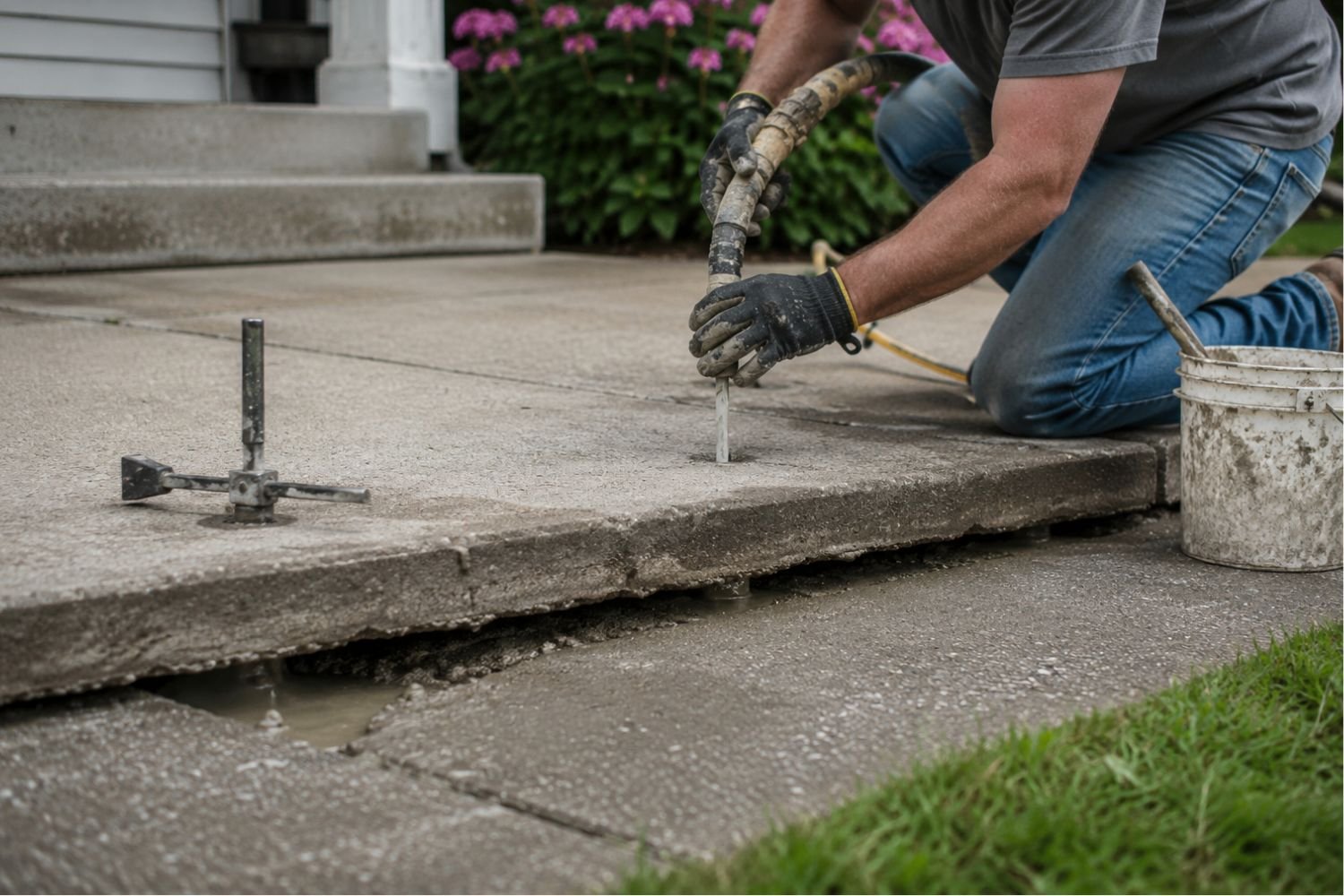
The process works by drilling small holes through the concrete, then pumping a slurry mixture of soil, sand, water, and sometimes Portland cement under high pressure into the void beneath the slab. As the slurry fills that empty space, it pushes the concrete back up from below.
| A concrete leveling technique where a soil-cement slurry is injected beneath a sunken slab through drilled holes to raise it back to grade. Common applications: driveways, sidewalks, garage floors, patios, steps, and pool decks. |
You may also hear it called slab jacking, concrete jacking, or simply concrete raising — these all refer to the same process. In Central Alberta, local contractors serving Red Deer, Olds, Blackfalds, and surrounding towns use these terms interchangeably.
Why Does Concrete Sink in Central Alberta?
Alberta’s climate and soil conditions make concrete sinking especially common. Here’s what causes it in communities across Central Alberta:
• Freeze-thaw cycles: Central Alberta winters repeatedly freeze and thaw the soil beneath slabs, heaving and shifting it season after season — a major issue in Red Deer, Sundre, Three Hills, and Rocky Mountain House
• Water erosion: Spring melt and heavy rain wash away the supporting soil under slabs — particularly common in lower-lying areas around Ponoka, Rimbey, and Stettler
• Soil compaction: Poorly compacted fill soil settles unevenly years after installation — seen frequently in newer developments in Blackfalds, Lacombe, and Innisfail
• Tree roots: Growing roots push slabs up in older neighbourhoods across Wetaskiwin and Olds — and when they die, leave voids below
• Poor original grading: Water draining toward slabs rather than away causes ongoing erosion in rural properties around Rocky Mountain House and Rimbey
2. How Mudjacking Works: Step-by-Step
Here is what happens during a professional concrete raising job from start to finish:
1. Site Assessment & Planning: A technician inspects the sunken slab, determines how far it has dropped, and identifies where voids are underneath. This is especially important in Central Alberta where freeze-thaw damage can create irregular void patterns.
2. Drilling the Injection Holes: Using a hammer drill or core drill with a carbide or diamond bit, holes 1.5–2.5 inches wide are drilled through the slab at calculated intervals. Placement is strategic — too close to edges and the slab can crack.
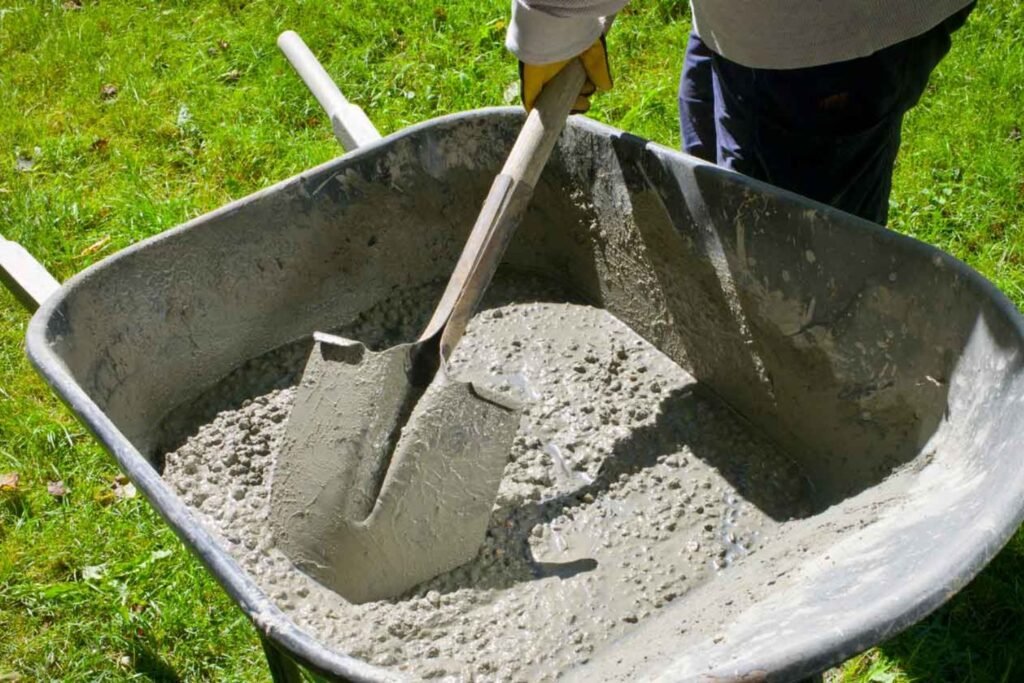
3. Mixing the Mudjacking Slurry: The mudjacking mixture is prepared — typically soil, sand, and water, sometimes with Portland cement. The mix must be thin enough to flow through the pump but thick enough to build pressure and support weight.
4. Pumping Under the Slab: A hydraulic grout pump forces the slurry through the holes and beneath the slab. The operator pumps slowly and moves between holes to ensure even distribution across the void.
5. Monitoring the Lift: As slurry fills voids, the slab gradually rises. This is the most critical phase — over-lifting is easy to do and impossible to undo without grinding or replacement.
6. Patching & Sealing: Holes are filled with non-shrink grout (colour-matched where possible). Cracks and expansion joints are sealed with flexible polyurethane caulk to block future water infiltration — critical in Alberta’s wet spring conditions.
| Warning: The Hardest Part Controlling the lift is where inexperienced operators go wrong. Once slurry is injected, it cannot be removed. An over-lifted slab creates a new trip hazard — the only fix is grinding or full slab replacement. Always use a professional for best results. |
How Long Does Mudjacking Take?
Most residential mudjacking in Red Deer and surrounding Central Alberta communities take 2–4 hours from start to finish. The concrete can be walked on within hours and driven on within 24 hours — no lengthy curing period like a fresh pour.
3. Mudjacking Cost in Central Alberta
Mudjacking is almost always significantly cheaper than full slab replacement. Here is a realistic cost breakdown for homeowners in Red Deer, Lacombe, Ponoka, and surrounding areas:
| Job Type | Typical Cost (Alberta) | Notes |
| Per Square Foot | $3 – $8 | Standard residential rate in Central AB |
| Sidewalk Panel | $400 – $900 | 1–3 sunken panels |
| Mudjacking Driveway | $600 – $1,800 | Standard 2-car driveway section |
| Garage Floor | $800 – $2,500 | Full leveling, multiple panels |
| Patio / Steps | $400 – $1,200 | Varies by size and void depth |
Mudjacking vs. Full Slab Replacement — Cost Comparison
| Repair Method | Avg. Cost (200 sq ft) | Disruption | Ready to Use | Longevity |
| Mudjacking | $600 – $1,600 | Minimal | Same day | 5–10 yrs |
| Foam Injection | $800 – $2,400 | Minimal | 30–60 min | 10–20+ yrs |
| Full Replacement | $3,000 – $7,000+ | High | 7–10 days | 25–50 yrs |
| DIY Mudjacking | $300 – $1,000+ | High (your time) | Variable | 1–5 yrs |
| Local Tip: Get a Free On-Site Estimate Costs in Central Alberta vary depending on how severe the settling is, soil conditions in your area, and site access. Most contractors serving Red Deer, Ponoka, Wetaskiwin, and surrounding communities offer free on-site estimates — always get one before committing. |
What Affects the Price in Central Alberta?
• Slab size and thickness — larger slabs need more material and time
• How far the slab has sunk — deeper voids from freeze-thaw damage require more slurry
• Access difficulty — tight corners or sloped lots in hillier areas like Sundre and Rocky Mountain House may add time
• Distance from Red Deer — jobs in Stettler, Three Hills, or Rimbey may include a travel component
• Extent of void — spring melt in Ponoka, Lacombe, and Innisfail can create larger-than-average voids
4. Mudjacking Equipment: What the Job Requires
Professional concrete raising contractors use specialized, purpose-built equipment. Here’s what’s involved — and why this matters when considering DIY:
| Equipment | Purpose | DIY Availability |
| Hydraulic Grout Pump | Forces slurry under high pressure beneath the slab | Rarely available; generic versions not built for concrete lifting |
| Mud Jacking Machine (Hopper + Mixer) | Mixes and holds slurry at consistent viscosity | Very limited rental availability in Central Alberta |
| Hammer / Core Drill | Drills 1.5–2.5″ holes through concrete | Available at tool rental shops in Red Deer, Olds, Wetaskiwin |
| Diamond Core Bits | Cuts clean holes without excessive cracking | Available at hardware stores |
| Grade Level Tools | Monitors lift to prevent over-lifting | Basic levels available; precision sensors are professional grade |
| Non-Shrink Grout + Caulk | Patches holes and seals joints after the lift | Widely available at local suppliers |
5. Can You DIY Mudjacking?
Technically? Yes. Practically? It’s a lot harder — and riskier — than most homeowners in Red Deer, Lacombe, or Wetaskiwin realize going in.
By the time you rent a grout pump (if you can find one in Central Alberta), buy mudjacking compound, rent the drill and bits, and spend a full day on the job, you’ve often spent 60–80% of what a professional quote would have cost — without the expertise to guarantee the lift, the void fill, or how long it lasts.
If You’re Determined to DIY: Key Points
• Source a hydraulic grout pump from a tool rental store in Red Deer or Lacombe — inventory is limited and pumps are not purpose-built for slab lifting
• Use premixed mudjacking compound bags from a concrete supplier rather than a raw soil-sand-water mix
• Avoid adding Portland cement unless experienced — it speeds set time and can clog equipment
• Drill holes 1.5–2.5″ wide, at least 12″ from slab edges to reduce cracking risk
• Go slow and check grade constantly — once material is in, it cannot come out
• Have a concrete saw ready in case adjacent slabs bind during the lift
| DIY Risks — Three Ways It Goes Wrong1. CRACKING: Incorrect hole placement or uneven pressure can fracture the slab entirely. 2. OVER-LIFTING: Once slurry is set, it cannot be removed. A slab lifted too high requires grinding or full replacement to correct. 3. INCOMPLETE VOID FILL: If slurry doesn’t reach all voids — especially common in freeze-thaw-damaged slabs in Central Alberta — the slab re-settles within months. |
6. Mudjacking Pros and Cons
| Pros | Cons |
| ✓ 50–70% cheaper than slab replacement✓ Fast — most jobs done in half a day✓ Concrete usable the same day✓ No demolition or landscaping disruption✓ Addresses the void causing the problem✓ Lower environmental impact than replacement | ✗ Slurry adds weight to weak or frost-heaved soil✗ Shorter lifespan than foam (5–10 vs 10–20 yrs)✗ Patch holes remain visible after completion✗ Not suitable for severely cracked slabs✗ Mixture can wash out if drainage not corrected |
7. Alternatives to Mudjacking in Central Alberta
Polyurethane Foam Injection (Foam Concrete Leveling)
Foam injection is the modern evolution of mudjacking. Instead of a heavy soil-cement slurry, a two-part polyurethane foam is injected through smaller holes (5/8″ vs 2″). The foam expands to fill voids, then cures rigid within 15–30 minutes. Because foam is lightweight and waterproof, it holds up better through Alberta’s freeze-thaw cycles than traditional mudjacking slurry.
| Feature | Mudjacking | Foam Injection |
| Hole Size | 1.5 – 2.5″ | 5/8″ |
| Material Weight | Heavy (adds load to soil) | Lightweight (2–4 lbs/cu ft) |
| Cure Time | Hours to a day | 15–30 minutes |
| Lifespan | 5–10 years | 10–20+ years |
| Cost | Lower upfront | Higher upfront |
| Freeze-Thaw Performance | Slurry can shift with frost | Waterproof; resists frost movement |
For most homeowners in Central Alberta, foam injection offers better long-term value despite the higher upfront cost — especially given the region’s harsh winters and significant freeze-thaw cycles in communities like Sundre, Rocky Mountain House, and Three Hills.
Concrete Grinding
For minor trip hazards (a slab that has risen 1/2″ or less), grinding the high edge is a fast, affordable fix. It doesn’t address underlying void problems but removes the immediate hazard. Cost: $100–$400. Available from concrete contractors throughout Red Deer and surrounding areas.
Full Slab Replacement
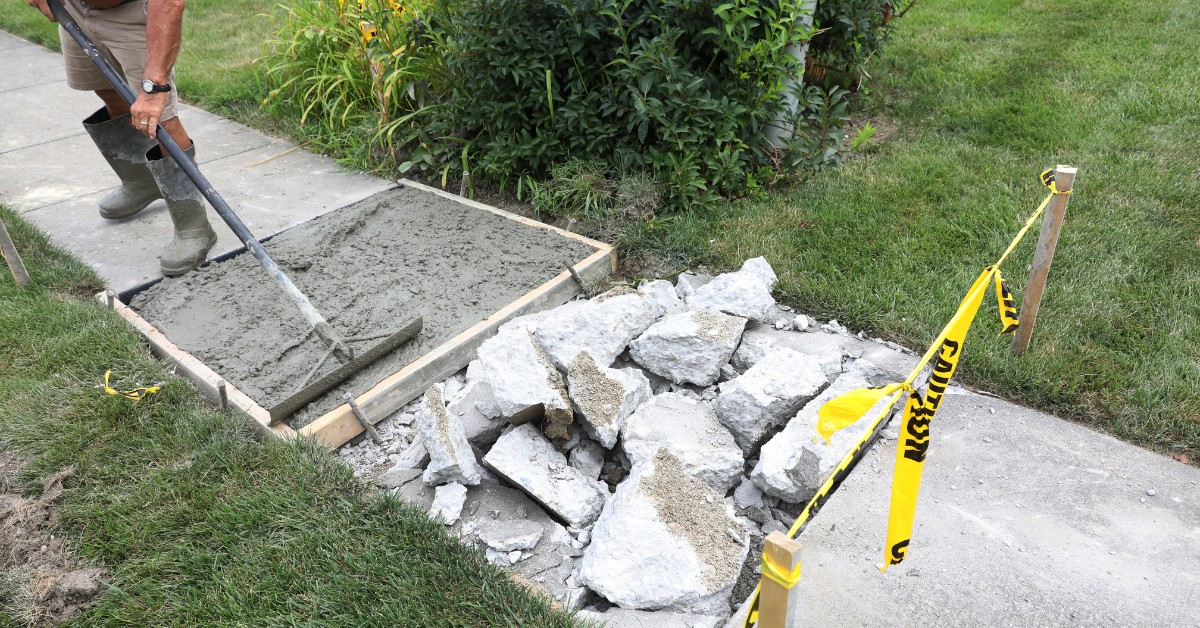
When a slab is severely cracked, crumbling, or has sunk more than 4–6″ with widespread void issues, replacement is often the only practical long-term solution. Budget $8–$18 per square foot including demolition and disposal. This is typically the right choice when freeze-thaw damage has compromised the structural integrity of the slab.
8. When to Call a Concrete Raising Professional in Central Alberta
Mudjacking makes sense as a professional service in Red Deer, Lacombe, Ponoka, Wetaskiwin, and surrounding communities when:
• The slab has sunk 1–4 inches but is otherwise structurally intact (no major cracks running through it)
• You have a trip hazard on a walkway, driveway, or patio that poses a safety or liability risk
• The slab is concrete (not asphalt — mudjacking is not used for asphalt surfaces)
• You want the repair done correctly the first time without risking a costly replacement
• You’ve noticed settling after a particularly harsh Alberta winter in communities like Sundre, Stettler, Rimbey, or Three Hills
Skip mudjacking and go straight to replacement when:
• The slab has multiple large cracks (more than 1/2″ wide) running through it
• The concrete is visibly crumbling or has deteriorated past the surface layer
• The slab has sunk more than 5–6 inches unevenly
• The root cause (failed drainage, major root system) has not been addressed
| Free Estimates Available Across Central AlbertaWe offer free on-site estimates for homeowners in Red Deer, Wetaskiwin, Olds, Rocky Mountain House, Lacombe, Blackfalds, Innisfail, Rimbey, Ponoka, Stettler, Sundre, and Three Hills. An experienced eye can tell you in minutes whether mudjacking, foam injection, or replacement is the right call — before you spend a dollar. |
9. Our Service Areas in Central Alberta
Red Deer Concrete Lifting provides professional mudjacking and concrete raising services to homeowners and businesses across Central Alberta. Here are the communities we serve:
| Service Area | Province | Coverage |
| Red Deer | Alberta, Canada | Mudjacking & Concrete Raising |
| Wetaskiwin | Alberta, Canada | Mudjacking & Concrete Raising |
| Olds | Alberta, Canada | Mudjacking & Concrete Raising |
| Rocky Mountain House | Alberta, Canada | Mudjacking & Concrete Raising |
| Lacombe | Alberta, Canada | Mudjacking & Concrete Raising |
| Blackfalds | Alberta, Canada | Mudjacking & Concrete Raising |
| Innisfail | Alberta, Canada | Mudjacking & Concrete Raising |
| Rimbey | Alberta, Canada | Mudjacking & Concrete Raising |
| Ponoka | Alberta, Canada | Mudjacking & Concrete Raising |
| Stettler | Alberta, Canada | Mudjacking & Concrete Raising |
| Sundre | Alberta, Canada | Mudjacking & Concrete Raising |
| Three Hills | Alberta, Canada | Mudjacking & Concrete Raising |
Not sure if we cover your area? Give us a call — we serve all communities in and around Central Alberta. If your town isn’t listed above, we may still be able to help.